The internet has changed dramatically over the last decade. Not long ago, people were excited about 4G networks, faster downloads, and online video streaming. Today, artificial intelligence, cloud computing, smart devices, and advanced connectivity are becoming a normal part of daily life.
However, I believe the next few years could bring even bigger changes. By 2027, the internet experience may feel very different from what most people use today. The changes may not only involve faster speeds but also smarter systems, more personalized digital experiences, intelligent devices, and new ways of interacting with technology. Best Free AI Tools for Beginners in 2026
Many people still think the future of the internet is simply about faster browsing. In reality, the internet is gradually evolving into an intelligent ecosystem where devices, services, and digital platforms work together more efficiently than ever before.
In this article, we will explore several technologies and trends that could transform how people experience the internet by 2027 and why these developments may influence businesses, students, content creators, and everyday users.
Why the Internet Is Entering a New Era
The internet is no longer just a collection of websites connected through networks.
Modern internet infrastructure is increasingly powered by artificial intelligence, cloud systems, edge computing, and automation.
Instead of waiting for users to search for information, future internet platforms may anticipate needs, provide recommendations more accurately, and deliver content faster than current systems.
This shift could create an internet that feels more intelligent, responsive, and personalized.
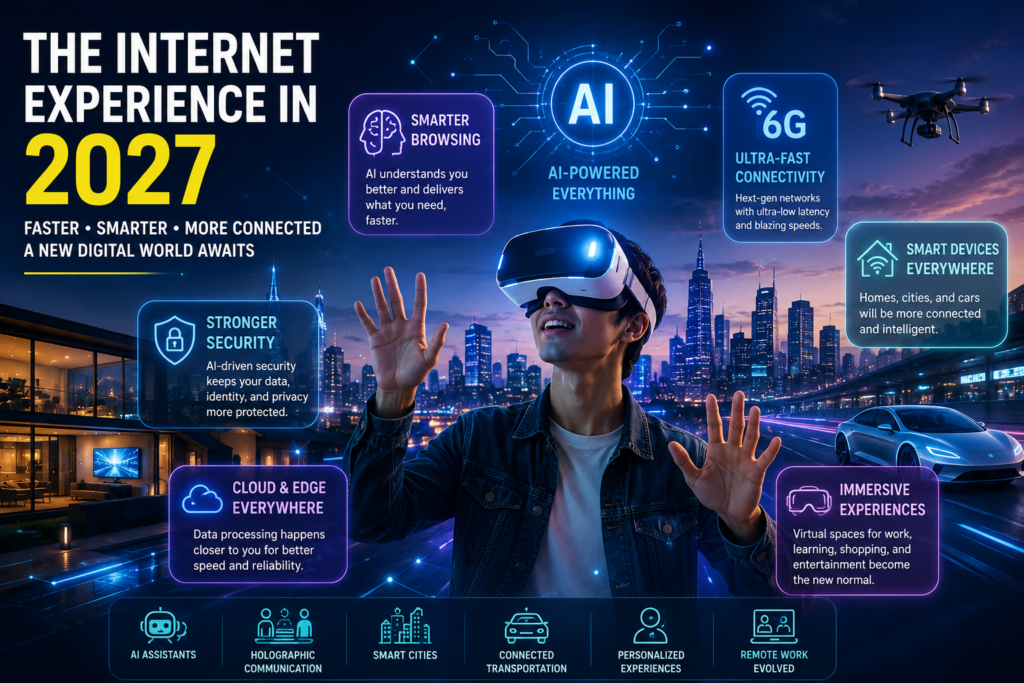
AI-Powered Browsing May Become the New Standard
One major change that may happen by 2027 is the rise of AI-powered browsing experiences.
Today, people usually search for information by typing keywords into search engines. Future internet systems may rely more heavily on AI assistants capable of understanding complete questions and delivering customized answers.
Instead of opening multiple websites to find information, users may receive summarized insights, recommendations, and personalized guidance directly through intelligent interfaces.
Possible benefits include:
- Faster information discovery
- Better search accuracy
- Personalized recommendations
- Improved productivity
- Enhanced online learning experiences
This could significantly change how people interact with online content.
Ultra-Fast Connectivity Could Transform Digital Experiences
The deployment of advanced wireless technologies may further improve internet performance.
While many regions are still expanding 5G coverage, researchers and technology companies are already exploring next-generation communication systems.
Future networks may provide:
- Lower latency
- Faster data transfer
- More reliable connectivity
- Better support for smart devices
- Improved virtual collaboration
As network performance improves, digital services may become more seamless and responsive.
Smart Devices May Become More Connected Than Ever
The number of internet-connected devices continues to increase every year.
By 2027, homes, offices, vehicles, and public infrastructure may become even more integrated through intelligent networks.
Examples include:
Smart Homes
Devices automatically adjusting lighting, temperature, security, and energy consumption.
Smart Transportation
Connected vehicles communicating with infrastructure to improve safety and efficiency.
Smart Workspaces
AI-assisted environments helping employees collaborate more effectively.
Smart Healthcare
Remote monitoring systems providing real-time health insights.
The internet may increasingly function as the invisible connection between these technologies.
Virtual and Immersive Experiences Could Become More Common
Another area expected to evolve is immersive digital interaction.
Current online communication often relies on text, images, and video calls.
Future internet experiences may include:
- Virtual workspaces
- Interactive digital classrooms
- Immersive shopping experiences
- Advanced gaming environments
- Virtual events and conferences
As technology improves, users may spend more time interacting within highly engaging digital environments.
Online Security Will Become More Important
As internet systems become smarter and more connected, cybersecurity will likely become a top priority.
Future security technologies may include:
- AI-based threat detection
- Advanced authentication methods
- Biometric verification
- Automated security monitoring
- Stronger privacy protections
Protecting digital identities and personal information will remain critical as internet usage continues to expand.
How Businesses May Benefit From the Future Internet
Businesses could experience major advantages from these technological improvements.
Potential benefits include:
Better Customer Experiences
Companies may use AI systems to understand customer needs more accurately and provide personalized services.
Faster Operations
Automation may reduce repetitive tasks and improve productivity.
Improved Decision Making
Advanced data analytics may help businesses identify trends and opportunities more effectively.
Global Reach
Improved connectivity may allow companies to serve international customers more efficiently.
What This Could Mean for Content Creators and Bloggers
Content creators may also experience significant changes.
Future opportunities may include:
- AI-assisted content research
- Faster content distribution
- Improved audience targeting
- Better engagement analytics
- Enhanced multimedia experiences
However, original thinking, creativity, and expertise will likely remain valuable even as technology becomes more advanced.
Skills That May Become More Valuable by 2027
Individuals who adapt to new technologies may gain significant advantages.
Important skills could include:
- Artificial Intelligence Literacy
- Digital Communication
- Data Analysis
- Automation Tools
- Cybersecurity Awareness
- Content Strategy
- Critical Thinking
- Problem Solving
These skills may help professionals remain competitive in a rapidly changing digital environment.
Frequently Asked Questions (FAQ)
Will the internet be completely different by 2027?
Probably not completely different, but several technologies may significantly improve speed, personalization, automation, and user experiences.
Will AI replace traditional search engines?
AI may change how people find information, but search engines will likely continue evolving rather than disappearing entirely.
Could virtual experiences become mainstream?
As technology improves, virtual collaboration, education, and entertainment may become more common.
Will internet security become more important?
Yes. Increased connectivity and digital activity will likely require stronger cybersecurity measures.
Which industries may benefit the most?
Technology, healthcare, education, finance, e-commerce, and digital media could all benefit from future internet advancements.
Conclusion
The internet has already transformed modern life, but the next stage of digital evolution may be even more significant. Artificial intelligence, intelligent networks, smart devices, immersive experiences, and advanced connectivity could reshape how people communicate, learn, work, and conduct business.
While nobody can predict the future with complete certainty, current technology trends suggest that the internet experience of 2027 may feel far more intelligent, personalized, and connected than what many people use today. Those who understand these changes early may be better prepared for the next generation of digital opportunities.